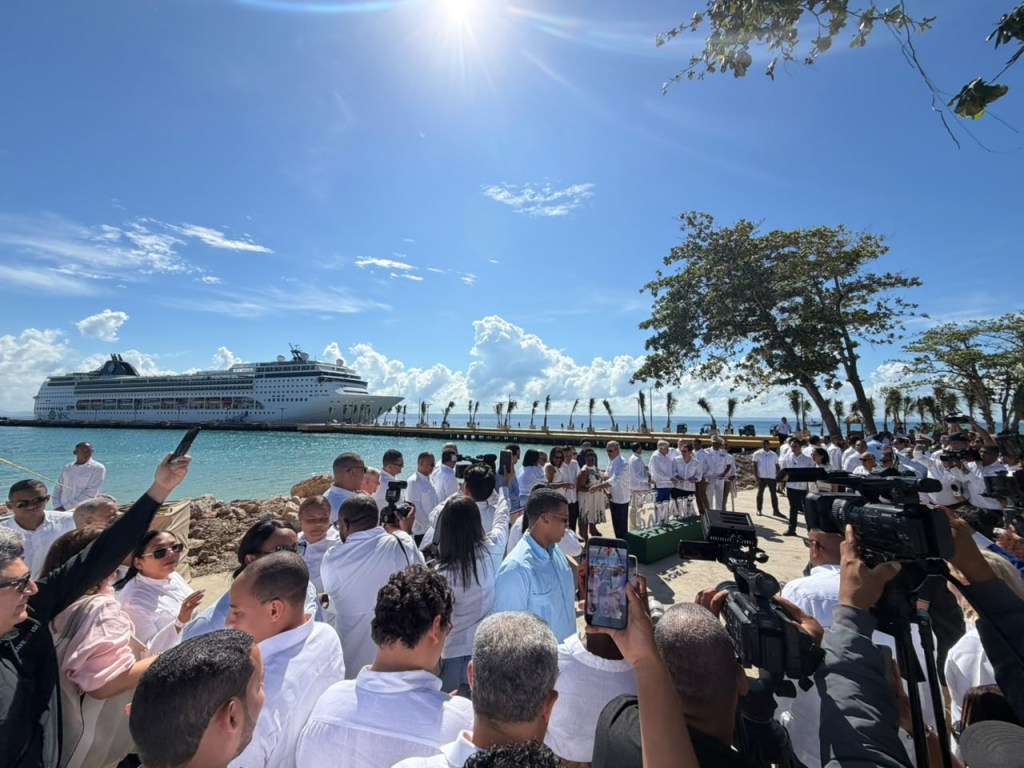
Today, 24 November 2026, Port Samaná officially opened at Arroyo Barril. I have mixed feelings, and I would rather say so than pretend otherwise. I am excited. I am also cautious. A cruise terminal is a double-edged sword, and the people who tell you it is only one edge are selling something.
A disclosure first. I run a real estate business on this peninsula, so I have a stake in what happens here. Read everything below with that in mind. I have tried to argue the case against my own interests as well as for them.
What was actually built
Port Samaná is a public-private partnership between the Dominican state and ITM Group. It turns the old Puerto Duarte cargo port into a cruise terminal, with an announced investment of US$68 million. The developers and the government talk about roughly 1,000 direct and more than 3,000 indirect jobs. The port authority projects about 230,000 visitors in 2027, 540,000 in 2028 and one million a year by 2030.
For scale: in 2025 Samaná received about 64,000 cruise passengers, around 2% of the national total. The two Puerto Plata terminals took roughly 78%. Samaná also already has a second, smaller terminal, Samaná Bayport, in the town itself, which opened its first phase in April. So this is not a new idea arriving from nowhere. It is a fast jump in volume for a place that has never handled it.
The good: first-order effects
These are the direct, visible gains, and they are real.
- Jobs. Construction first, now port operations, guides, drivers, restaurants, shops and security. In a province where tourism is already the main employer, more demand for labour matters.
- Passenger spending. Even modest spending per head adds up at volume. More on the numbers below.
- Public money for public works. The government has allocated over RD$185 million to pave 29 streets around the Arroyo Barril terminal, and talks of better road links to Sánchez and Las Terrenas. Roads built for cruise buses also serve the people who live here.
- Port fees, taxes and supplier contracts. Ships pay for dockage, utilities and services, and buy some provisions locally. This is the most dependable part of the cruise economy because it does not depend on what passengers choose to do.
- A shop window. Every passenger is a free sample of the destination. Some will come back and stay for a week. Some will buy a plot.
The bad: first-order effects
Now the honest part. Cruise passengers are a different customer from the visitor who flies in and stays. A 2025 World Bank estimate puts cruise visitors at roughly US$37 to US$139 per visit in the Caribbean, against more than US$1,600 for a stay-over tourist. Industry-funded surveys put the average closer to US$100 a head, but a lot of that figure is excursions sold on the ship and run by large operators.
Back-of-envelope: one million passengers at those rates is roughly US$37 million to US$139 million in gross onshore spending. That is the same money as about 23,000 to 87,000 stay-over visitors. It is a good number, but it is gross, not net. What stays in Samaná after the excursion company, the importer and the shipping line take their share is the figure that matters, and nobody has published it for this port.
Then there is the environment, which I will take in three parts.
- Construction and dredging. Marine works stir up sediment, and sediment smothers reef and seagrass. Port expansions elsewhere in the Caribbean have drawn exactly this criticism.
- Operations. Ships at berth burn fuel unless they plug into shore power. Wastewater, solid waste, noise and anchoring on reefs are all manageable, but only with rules that are enforced.
- Whales. Samaná Bay is one of the best places on earth to see humpback whales in winter, and that is exactly the cruise season. More and bigger vessels in the same water at the same time means more risk of strikes and disturbance. Icon of the Seas, the largest cruise ship in the world, has been announced for a 2027 call. Big ships and whale calving grounds are a combination that needs a speed limit and a plan.
I looked for the environmental impact study for this specific project and could not find one I can confidently tie to it. That does not mean it does not exist. It means the public conversation is thin, and a project of this size deserves a better one.
Second-order effects: where it gets interesting
First-order effects are the ones in the press release. The second-order effects decide whether this was a good idea ten years from now.
The upside:
- A conversion funnel. If even a small share of day visitors return for a longer stay, the cruise port becomes the cheapest marketing channel the peninsula has ever had. Stay-over visitors are where the real money is.
- Better infrastructure for everyone. Roads, water, power and public spaces built for 10,000 visitors a day do not disappear on the days no ship calls.
- Skills. A generation of guides, drivers, chefs and small business owners learns to serve international guests. That knowledge is portable.
- Diversification. A province that depends less on a single season, a single market or a single airport is more resilient.
The downside:
- Brand drift. Samaná sells itself as wild, quiet and green. Ten thousand people landing in a morning is a different product. Destinations that chase volume often lose the premium visitor who came for the opposite.
- Land and prices. Announcements move land prices before a single ship docks. Speculation, rising rents and local families priced out of their own neighbourhoods are a familiar pattern near new ports. As someone who sells land here, I know exactly who benefits from this and who does not.
- Dependence. Cruise lines can redeploy ships the moment a better port, a hurricane or a policy change comes along. A town that builds its economy around a schedule it does not control has handed away some of its bargaining power.
- Strain on the commons. Water, waste, traffic and the narrow roads across the peninsula were not designed for this. It is still unclear how excursion routes will cope with up to a million visitors a year.
- Induced development. Ports attract hotels, shops and housing, which attract more roads and more pressure on the bay, the mangroves and the national parks across the water. The footprint of a port is far bigger than its fence.
What the research says
The academic evidence is mixed, and that is the honest summary. One well-known natural experiment published in Tourism Management in 2018 found that in low-tax, low-regulation settings with no community development plan, large cruise projects can fail to deliver benefits to local people. On the other side, a 2023 review of a decade of research argues the debate focuses too narrowly on ship emissions and that cruising is a small sector whose impact depends heavily on how a port is managed. Put together, the lesson is that the outcome is a policy choice, not a law of nature.
What would make me less cautious
This is what I will be watching, and what I think the community should demand:
- A published environmental impact study and a public monitoring plan for water quality, reefs and whales.
- Speed limits and routing rules for ships during whale season.
- Shore power, strict wastewater rules and an enforced daily cap on passengers.
- Real space for local operators, not only the large excursion companies tied to the ships.
- Public reporting of how much spending actually stays in Samaná.
- A plan to turn day visitors into stay-over visitors, with the peninsula positioned as a place worth a week, not a morning.
My bottom line
I think Port Samaná can be good for Samaná. I do not think it will be good automatically. The jobs and the roads are real. The risks to the bay, to the character of the place and to the people least able to absorb rising prices are also real. Whether this becomes a story about growth that lasted or a warning for the next peninsula depends on decisions that are being made right now, mostly in rooms that residents are not in.
So I am cheering, and I am watching. I would encourage everyone with a stake in this peninsula to do the same.
Sources
- Rio Times: Port Samaná cruise terminal opens 24 November
- Presidencia de la República: opening announcement, jobs and projections
- DR1: Port Samaná to open 24 November 2026
- Dominican Today: Samaná Bayport first phase
- eTurboNews: Caribbean cruise spending debate, citing World Bank 2025
- MacNeill and Wozniak (2018), Tourism Management
- Papathanassis and Caric (2023), Cambridge Prisms: Coastal Futures
The back-of-envelope figures above are my own arithmetic on the cited ranges, not published estimates for Port Samaná.



Leave a Reply