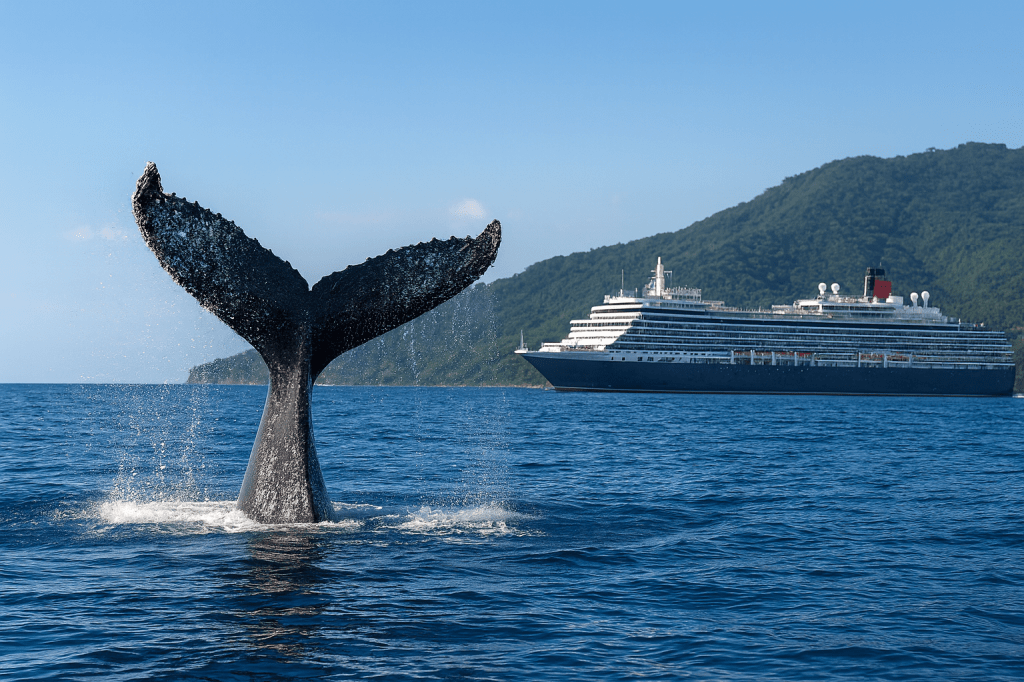
… Yet most people here don’t realize how fragile it has become.
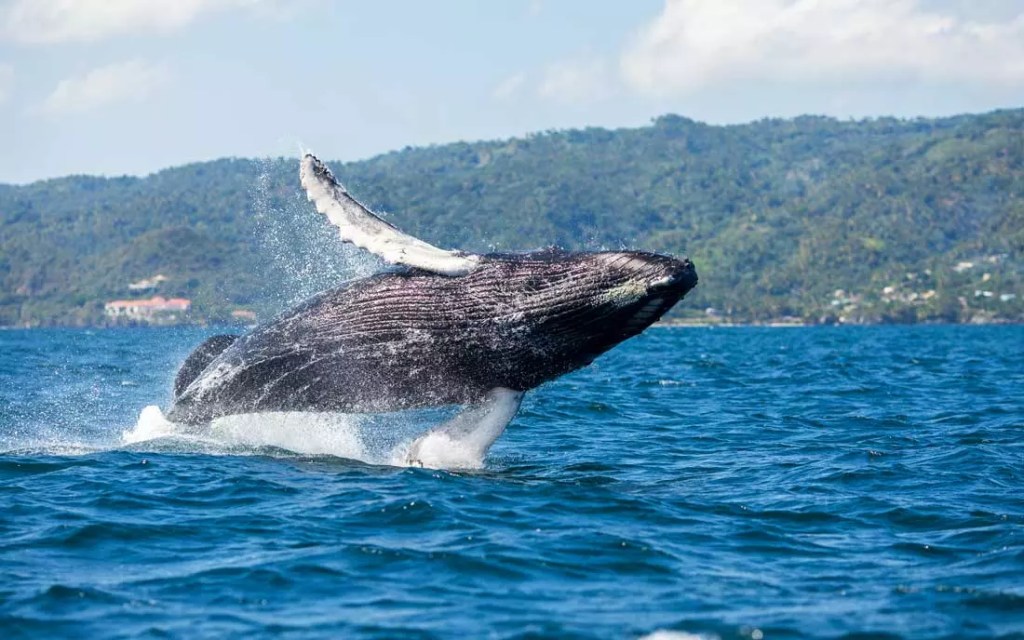
Every winter, humpback whales travel thousands of kilometers to give birth and nurse their calves in this exact body of water. NOAA, the International Whaling Commission, and the Dominican Marine Mammal Sanctuary have documented that Samaná consistently hosts one of the highest densities of breeding humpbacks anywhere in the Caribbean.
Recent field surveys (WWF & Caribbean Cetacean Society, 2024–25) recorded 60 to 140 whales present in the bay at the same time, with densities reaching one whale per three square kilometers. That is not normal — that is globally significant.
But here’s the part everyone is avoiding:
*The whales themselves are not endangered.
The habitat they depend on here is.
And habitat loss is how population decline begins.
Across multiple monitoring programs, scientists have already documented:
- Rising vessel disturbance during breeding season
- Early avoidance behavior in mother–calf pairs
- Degradation of mangroves and seagrass beds
- Water-quality decline in river outflows
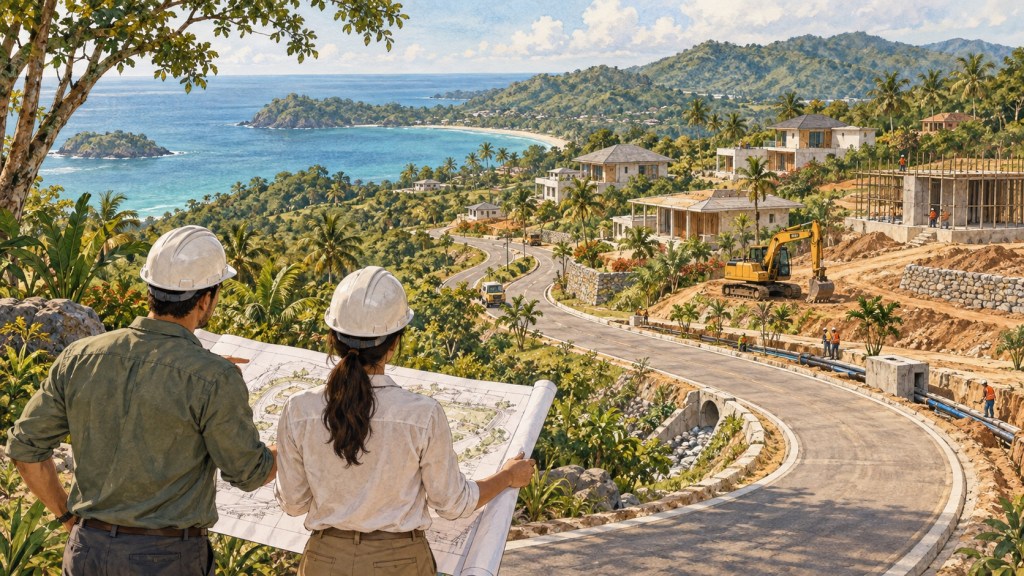
- Coastal development is creeping into sensitive areas
- Fragmented enforcement enabling non-compliance
These are the exact early-warning patterns that preceded whale displacement in Maui, Baja California, the Salish Sea, and Península Valdés. In every one of those places, people only reacted after the whales had already begun leaving.
When a nursery collapses, it does not come back.
When whales shift their calving grounds, they do not return.
Samaná is still in the window where action is cheaper than restoration, easier than crisis management, and far more effective than the expensive ecological triage other regions are now attempting.
If we want Samaná to remain the heart of the Atlantic migration — and if we want the local economy to continue benefiting from it — then we need to stop pretending this is “someone else’s job.” Protecting this bay is not charity and not ideology.
Sources for bookworms:
https://wwfdutchcaribbean.org/news-stories/dominicanwhaleresearch/
https://wwhandbook.iwc.int/en/country-profiles/dominican-republic
https://sanctuaries.noaa.gov/news/press/2007/pr012607.html
https://www.nature.org/content/dam/tnc/nature/en/documents/Caribbean-Marine-Biodiversity-Program-Dominican-Republic.pdf
https://stellwagen.noaa.gov/science/humpbacks.html



Leave a Reply