2025 was a challenging year for real estate developers across the Dominican Republic, and Samana Group was no exception. Market conditions tightened simultaneously across our core buyer regions, extending sales cycles and delaying financing across the sector.
At the same time, the year materially strengthened the company’s structure, governance, and execution readiness. What began as macro pressure accelerated decisions that positioned Samana Group for durability rather than momentum.

Market Context
Across all major source markets, conditions shifted in parallel. In the United States, higher domestic yields reduced appetite for offshore real estate. In Europe, particularly Spain, weaker growth and elevated interest rates slowed outbound investment. Locally, higher borrowing costs and conservative bank lending reduced domestic absorption.
These dynamics affected both early-stage and established operators. In this environment, resilience depended more on structure than speed.
A Year of Structural Reorientation
2025 became a year of deliberate reorientation for Samana Group.
The company transitioned from a founder-led startup to a structured international platform built on risk separation, capital discipline, and long-term financial viability. Separate, locally governed Fideicomisos (REITs) were established across the core business lines of land banking, development, utilities, and rental management, creating clear operational and fiduciary boundaries.
This marked a broader shift from entrepreneurial execution to institutional process. Operating costs were reduced, legacy structures simplified, and execution authority consolidated locally in the Dominican Republic. Company operations are supported by top-tier local and international partners, including Guzmán Ariza (legal), Estating (investment), PCG SA and Structum (construction), and Ernst & Young (governance and tax).
As part of this reorientation, the company narrowed its focus to two priorities that compound over time: expanding the land bank and stabilizing execution on projects already underway. Activities that did not create a durable advantage or measurable value were exited or paused.
What Went Right in 2025
Land Banking
The strategic emphasis on land acquisition proved correct. High-quality land in the Samaná region is increasingly scarce, and disciplined land banking remains the foundation of long-term value creation.
In 2025, Samana Group became the first project in the Caribbean to complete full SIX SIS due diligence, enabling the listing of its bonds, and the first to pass independent custodian due diligence, allowing U.S. citizens to invest in land-backed instruments through qualified retirement accounts, including 401(k) structures. This materially expanded the addressable investor base and received a positive market response.
The initial $7.5 million (as of December 31st, 2025) in fundraising marked the first year of capital formation under this framework, validating both the structure and the demand for institutionally governed land exposure. Sustainability within this strategy is treated as an operating constraint, embedded structurally rather than communicated rhetorically.
Commercial Validation
Despite a constrained macro environment, core projects continued to demonstrate clear market validation. Nomad City delivered a strong pre-revenue sales performance, achieving a Total Sales Value of $19.7 million from the pre-sale of 84 units as of December 31st, 2025. Demand, pricing discipline, and unit economics were validated under materially tougher conditions than in recent years, confirming product-market fit even amid a broader slowdown.
What Macro Signals to Follow in the Dominican Republic in 2026
In 2026, the most important signals will not come from tourism headlines, but from structural forces that determine whether growth compounds over time or merely circulates.
1. Dollar vs Peso: The Silent Kingmaker
Headline GDP figures matter less than currency dynamics. The relationship between the U.S. dollar and the Dominican peso reshapes construction costs, imported materials, debt servicing, rental yields, business margins, and household purchasing power.
Direction matters less than volatility. Currency stability enables planning, pricing, and long-term investment. Instability transfers risk onto businesses and residents alike, investors don’t like instability.
2. Foreign Direct Investment: Capital That Commits
Tourism statistics are promotional. Foreign Direct Investment is declarative. FDI reflects trust in the legal system, regulatory continuity, and execution environment. More important than headline inflows is where capital is deployed. Investment that builds productive capacity across multiple sectors strengthens resilience; capital concentrated in a single asset class increases cyclicality. Economies dependent on one dominant sector do not compound. They oscillate.
3. Tourism Leakage: The Question Beneath the Numbers
Tourism growth often looks impressive, but headline figures say little about real economic impact. The critical question is how much of the money generated by tourism actually stays in the country. When hotels, airlines, booking platforms, supply chains, and management services are controlled abroad, a large share of tourism revenue leaves the local economy quickly. In these cases, tourism acts less as a growth engine and more as a transit system: money arrives, circulates briefly, and exits. High tourism combined with high leakage creates dependency, not resilience. If tourism does not compound locally through ownership, supply chains, and reinvestment, it eventually produces social pressure rather than lasting prosperity.
Outlook for 2026 for Samana Group
Entering 2026, Samana Group is structurally simpler, operationally unblocked, and fully focused on execution. The lessons of 2025 have translated into tighter capital discipline, clearer governance, and a business model anchored in assets already under control rather than assumptions.
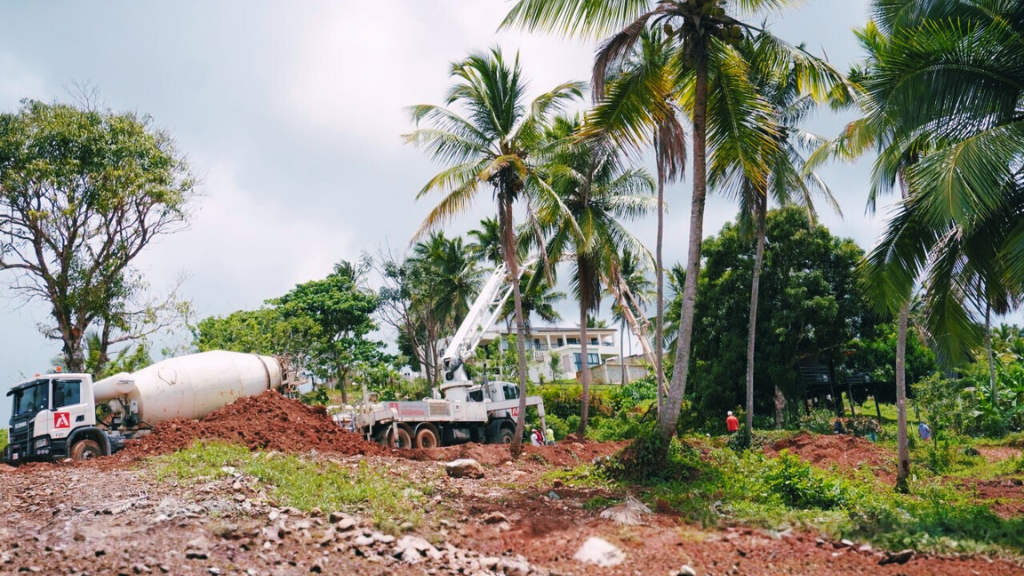
Our priorities for 2026 are explicit and measurable: achieving profitability at the holding level and completing the construction of Nomad City Phase 1. With governance risks addressed, financing pathways reopened, and the platform stabilized, we approach the year with confidence grounded in execution readiness, not ungrounded optimism.
2026 is not a year of experimentation. It is a year of delivery.






Leave a Reply