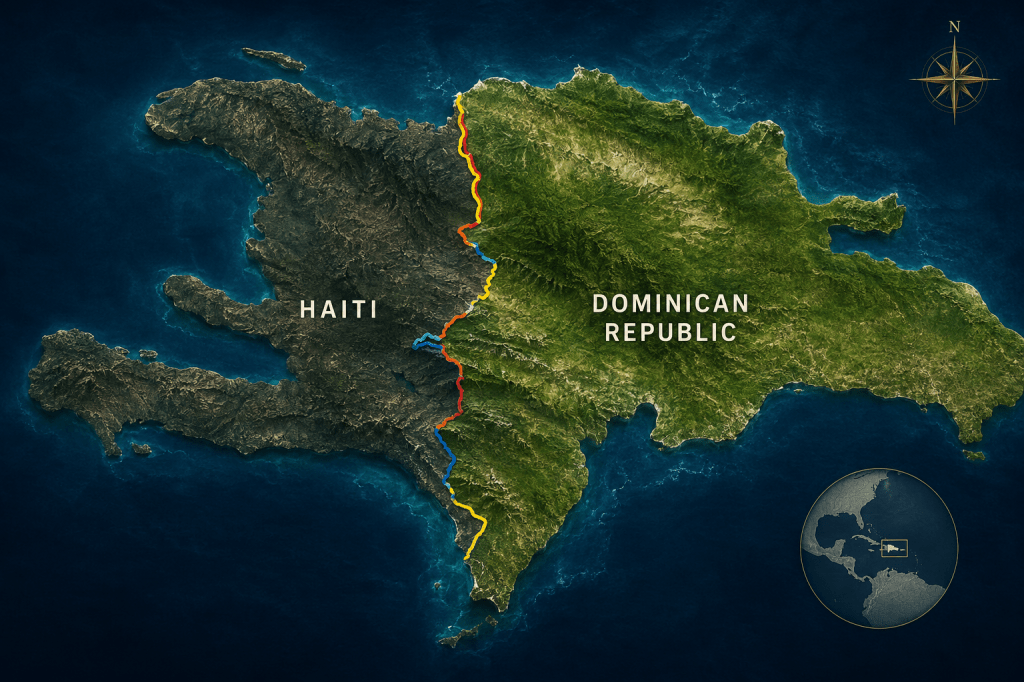
Watching what’s happening in Ceuta and Melilla this week, it’s hard not to notice how immigration has become one of Europe’s defining political fault lines. Thousands of people attempting to cross a single border can reshape national debates overnight.
Living in the Dominican Republic gives me a very different perspective.
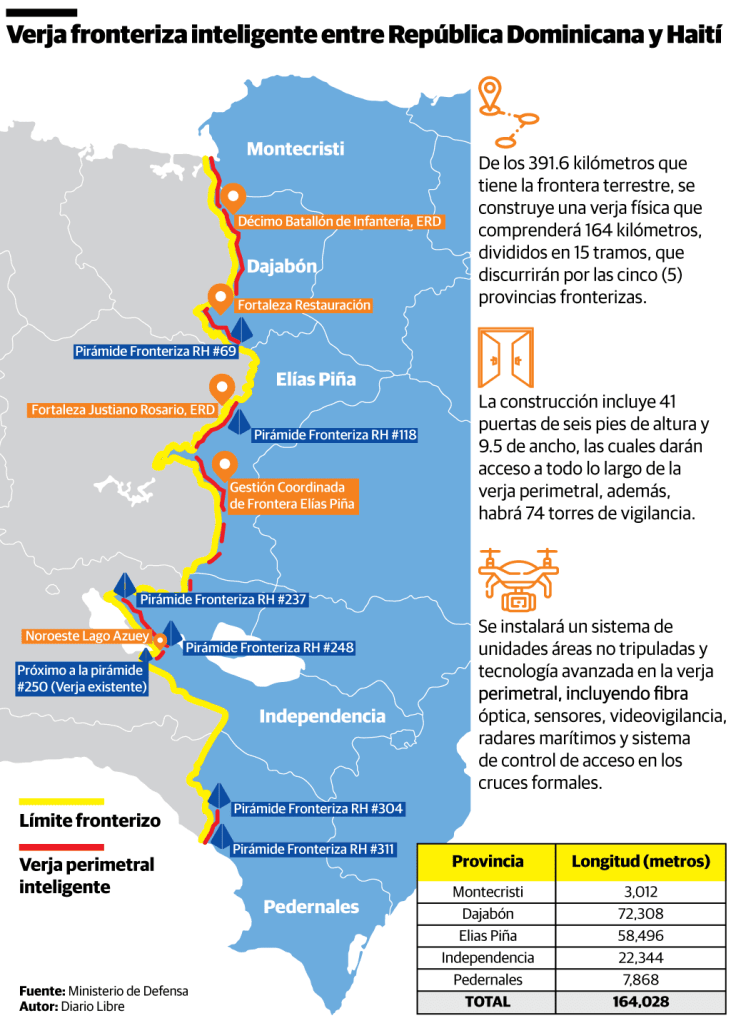
Few Europeans realize that the Dominican Republic shares a 392 km land border with Haiti — a country facing one of the deepest humanitarian and security crises in the Western Hemisphere. Yet despite enormous migration pressure, the Dominican state has spent the last several years building one of the most technologically advanced border security systems in the Americas.
The project combines a physical barrier with surveillance towers, thermal and optical cameras, drones, radar, motion sensors, fiber-optic communications, and rapid-response patrol units. More than 160 km of the border is being equipped with this “smart fence” system, and the government continues expanding it.
At the same time, immigration enforcement is remarkably strict. In 2025 alone, Dominican authorities reported removing around 380,000 people who lacked legal immigration status, while maintaining one of the toughest deportation policies in the region.
What’s interesting is that this approach enjoys broad political continuity. Governments may differ on many issues, but securing the border has remained a national priority because the alternative is viewed as risking instability, organized crime, and pressure on public services.
Europe often discusses immigration primarily through the lens of morality and ideology. Countries that actually live next to large-scale migration pressures tend to discuss it through the lens of state capacity.
Whether you agree with one model or another, one thing is clear: immigration policy is ultimately inseparable from border policy. A country that cannot control who enters its territory has already surrendered one of the most fundamental functions of sovereignty.
Perhaps Europe has something to learn — not necessarily to copy the Dominican Republic, but to understand why countries facing the greatest migration pressure often invest first in border control and only then debate immigration policy.



Leave a Reply