
I’m a real estate developer, and this is going to sound crazy — but hear me out.
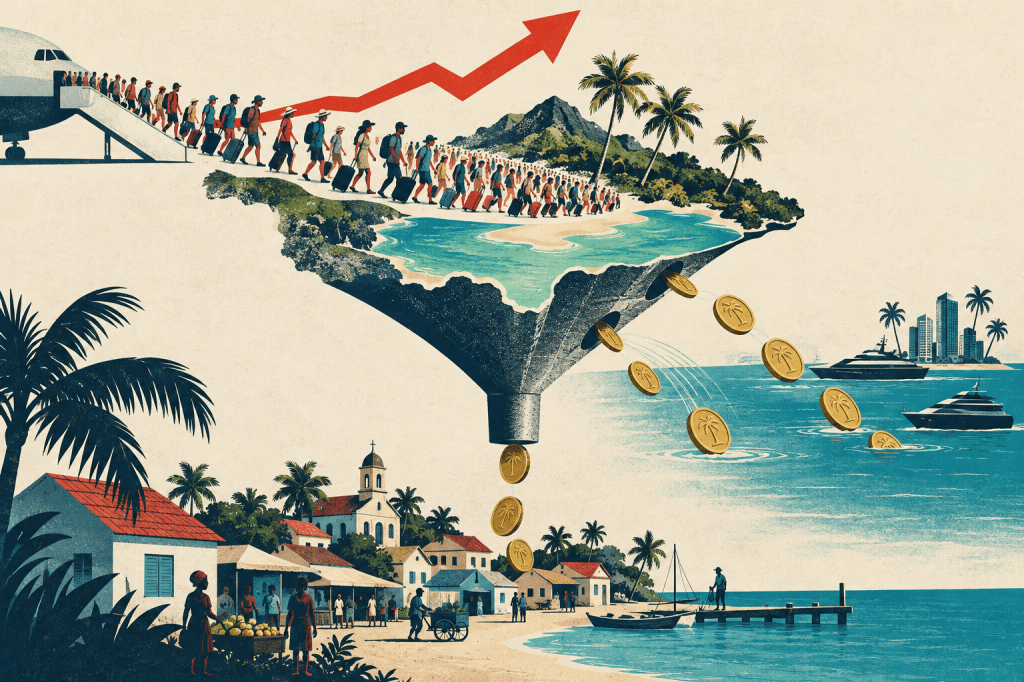
I think CONFOTUR isn’t a tourism incentive. It’s a textbook case of regulatory capture — and it’s not even the only one.
Regulatory capture is simple: a rule gets written in the name of the public good, but only the incumbents it was supposed to hold accountable can afford to comply with it. The rule survives because the industry defends it, loudly, every time someone proposes touching it. Not a conspiracy theory — a pattern. The Dominican Republic has been running it since before I was born.
My conflict of interest, upfront: Samana Group uses CONFOTUR and pitches its 15-year tax exemption to investors. So this isn’t an outsider lobbing grenades — it’s someone who benefits saying the system is captured.
Look at what qualifying actually requires: an environmental impact study, feasibility studies, a fiduciary trust, a tour operator agreement, clean land titles, and a 3-to-6-month government review. Every step has a fixed cost — and fixed costs don’t scale down. A $200M resort and a $3M boutique project pay roughly the same fee to walk through that door. For the resort, a rounding error. For the developer building twenty units instead of two hundred, often the difference between a project and no project. It’s a toll only the biggest trucks can afford.
Whenever reform is floated, you’ll hear the same numbers: 16-18% of GDP, 800,000 jobs, remember Puerto Plata. All true, all beside the point. Nobody wants incentives gone entirely. The question is why the only door in the building is sized for capital that’s already concentrated.
And CONFOTUR isn’t the exception. Electricity generation is ~85% privately owned by a small handful of companies tracing back to the 1999 “capitalización” reform — sold as opening the sector, in practice a short list of partners inheriting it. Telecom is similarly concentrated. Free trade zone law was built at a scale small entrepreneurs were never going to hit either. Same shape, going back to before 1961, when one family controlled a staggering share of the whole economy.
So: is it possible this country’s growth model was never built for a broad middle class of entrepreneurs — that “attracting investment” quietly means attracting it to whoever can already absorb the compliance cost of getting through the door?
I’m not arguing to torch CONFOTUR or any of this — capital-intensive projects need capital-intensive rules, and the investment is real. But “equal rules” has never meant “equally affordable rules.” Until incentive design scales to project size instead of pricing in a flat toll, we keep building an economy that grows 5% a year for fifty years while the same names sit at the top.






Leave a Reply