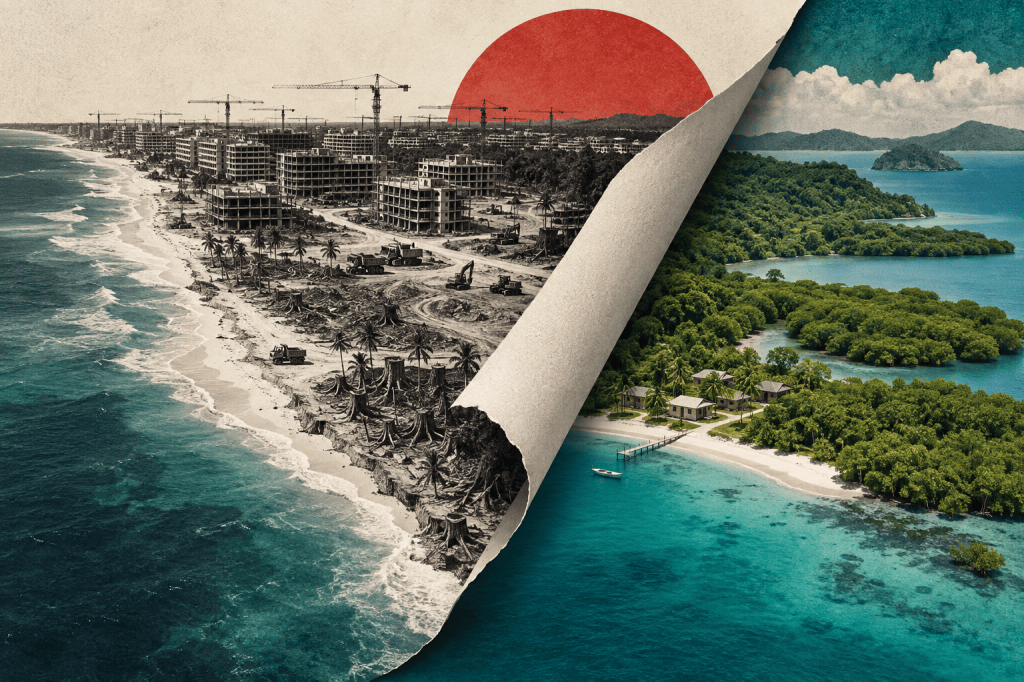
Why does it always end like this? Tulum. Cancún. Bali. Phuket. Punta Cana. Las Terrenas. Overbuilt. Overrun. And the locals priced out.
I remember standing on a beach in Tulum years ago. Jungle behind me, turquoise sea in front. It felt sacred, untouched, healing. Today that same coastline is packed with resorts. The jungle is gone, roads cut through mangroves, and local families can no longer afford to live there. Samaná is home for me now, so I take this personally. Let me explain the pattern, because once you can see it, you can interrupt it.
The anatomy of a collapse
The story is as old as tourism itself, and it runs in four steps:
- Discovery. A few travelers find an untouched place. Prices are low, nature is intact.
- Overexposure. Social media and cheap flights turn the secret into a destination. In 2017 alone, over 2.2 million tourists visited Tulum’s ruins.
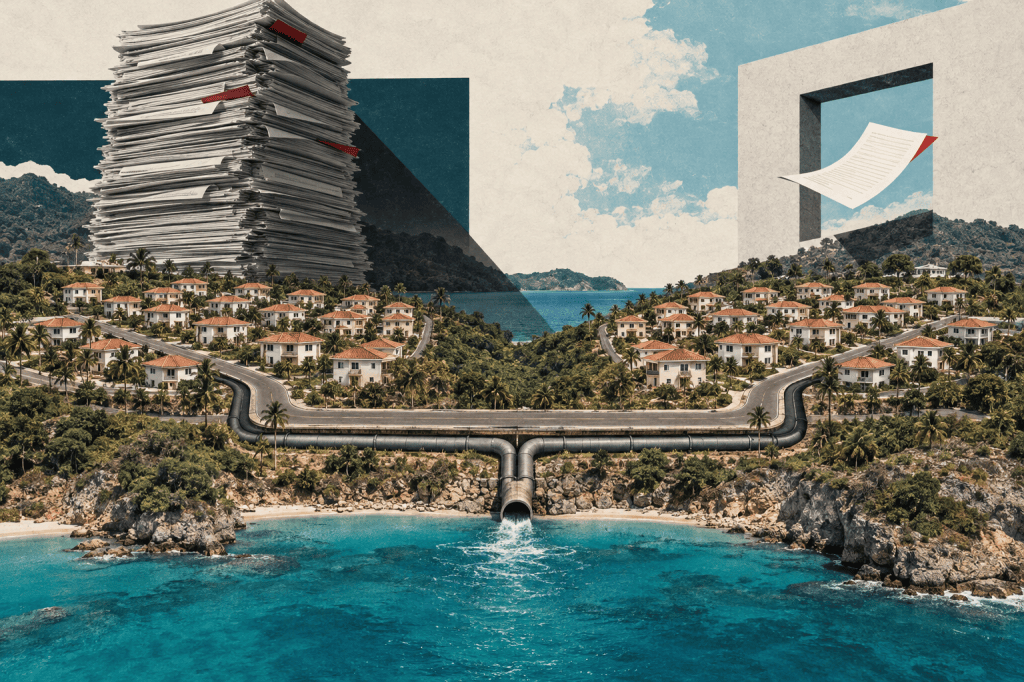
- Building without infrastructure. Hotels and rentals appear faster than roads, sewers and power. Developers clear forest because land is cheap and rules are weakly enforced.
- Collapse. The thing people came for is gone, and so are the locals who made the place worth visiting.
Step three is where the damage becomes permanent. Tourists leave when a place stops being beautiful, but sewage in limestone and cleared mangroves stay.
What the evidence says
Tulum. The local environmental association Tulum Limpio says the area’s treatment systems are over capacity and that hotel discharges go directly into the ground. Because the Yucatán sits on porous limestone, wastewater reaches the water table without natural filtration. Reporting on the association’s findings describes traces of fecal matter in several cenotes and coastal zones, and warns that contamination can travel through the underground river networks that connect cenotes, mangroves and the sea (The Tulum Times). To be fair to the evidence: the public reporting rests largely on the association’s claims and unnamed lab analyses, not on a single published study. But the direction is consistent, and the mechanism is not controversial.
Maya Bay, Thailand. At its 2018 peak the bay, made famous by the film The Beach, received an estimated 6,000 visitors a day. Boat anchors are thought to have destroyed as much as half of its coral. Authorities closed it in 2018 for what was planned as four months and became more than three years. It reopened in January 2022 with a cap of 300 people per shift, no anchoring in the bay and a floating dock. Counts of black-tip sharks in the bay rose from about six in 2018 to as many as 100 (Lonely Planet). Nature recovers when you give it a chance, but it took a government shutting the doors to make it happen.
Bali. Tourism is about 60% of Bali’s GDP, and the island received nearly 4.8 million foreign visitors in the first eleven months of 2023 alone. In February 2024 it introduced a 150,000 rupiah (about USD 10) levy on foreign arrivals, explicitly to offset environmental damage and protect culture (Globetrender). Venice, Mount Fuji and others are doing similar things. Destinations are now rationing access after the damage, rather than designing for limits beforehand.
Why regulation usually arrives too late
This is my opinion, built from watching it happen: the problem is not that governments or developers are uniquely bad in these places. It is that incentives point the wrong way at the wrong time. The first investor to buy cheap land and sell to the second captures the value, and the cost of the damage lands years later on someone else. A rule that comes after the boom is a fine. A rule that comes before it is a plan, and almost no destination manages to write the plan in time.
Samaná is at the tipping point
Eight years ago, Yaritza, now my wife, showed me Samaná. Its nature heals and its people uplift. It became our second home, and now it is simply home. And that is why I can see what is coming: new roads, a cruise terminal, international flights and rising land prices. Those are exactly the early signals of step two.
Samaná will be developed. That is not the question. The question is who writes the rules before it happens, and what happens to the land after the first wave of buyers.
Our answer: a Community Land Trust
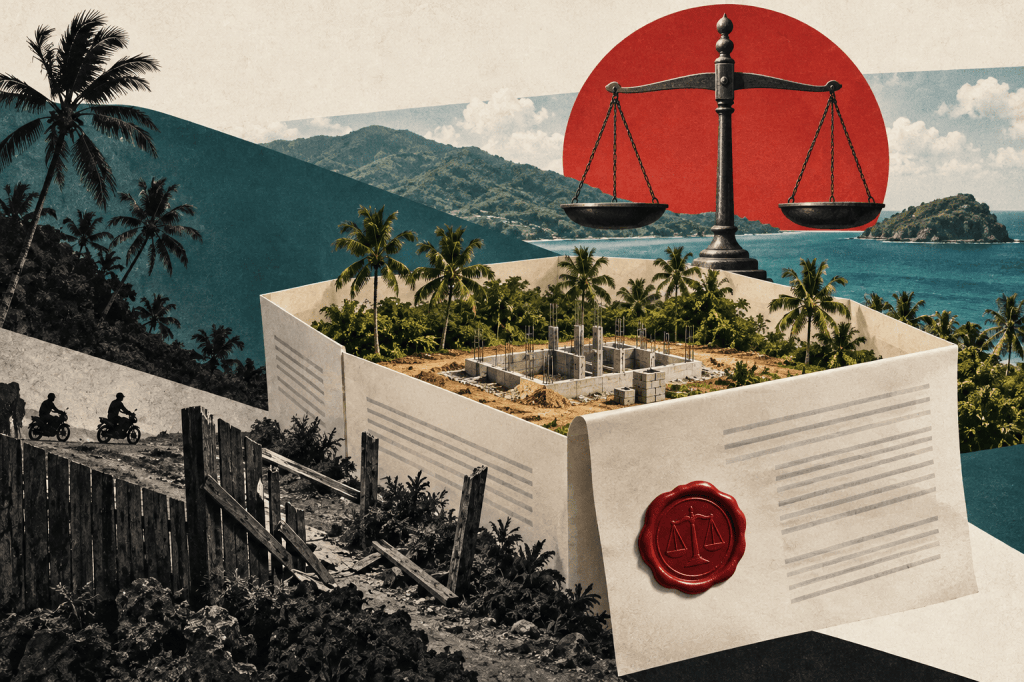
We said: not here, not again. We created the first Community Land Trust in the Dominican Republic, built on Dominican law and designed to balance sustainable tourism, land conservation and community ownership. The key idea is that a trust cannot do the speculator’s trick of buying, flipping and leaving, because the land stays inside the structure. The rules are written into the Trust Constitution, so they bind owners long after the founders have gone:
- 80% green space preserved. No overbuilding.
- Self-sufficiency. Rainwater, renewables and local farms.
- Local inclusion. 20% of units reserved for locals at a fixed price.
- Cultural preservation. Afro-Caribbean, Taíno and settler heritage honored.
Everything operates under Samaná’s Eco-Tourism Province designation, with measurable KPIs on waste, water and biodiversity, and investors get voting rights and transparency. I won’t pretend a legal structure guarantees a good outcome. It only makes a good outcome enforceable, which is more than most coastal development has ever had.
If you have ever loved a place that was later ruined by unchecked growth, you know what is at stake. Learn more at samana.group.




Leave a Reply