Here is something I learned this week that I can’t stop thinking about.
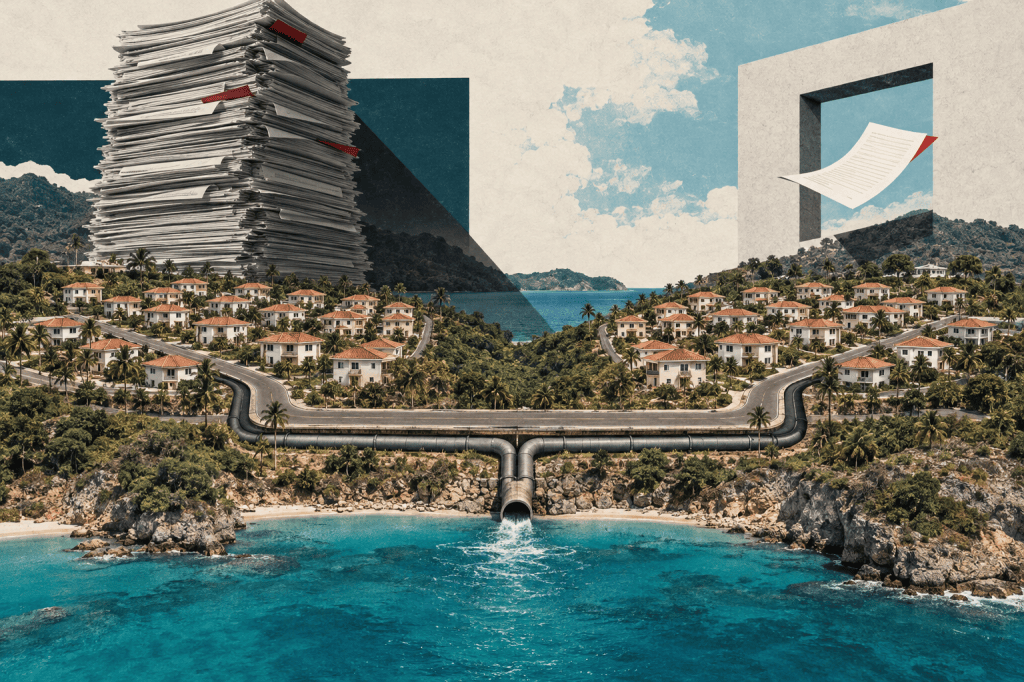
If I develop 100 villas as one project in the Dominican Republic, I face a long list of obligations: environmental review, project and subdivision approvals, and a duty to plan roads, water, sewage, electricity and green areas. Good. That is how it should be.
But if the land is already divided into individual lots and 100 owners each build their own house, each of them follows a much lighter process. An ordinary building permit for a single house. Far less environmental scrutiny. No one is required to look at the whole picture.
Same land. Same 100 houses. Same pressure on water, drainage, roads and coastline. Far fewer rules.
The rules look at the builder, not the impact
The system is written around who is building, not around the cumulative impact of what is being built in a given place. That is backwards. A hillside doesn’t care whether one company or a hundred owners poured the foundations. Rain runs off the same way. Sewage has to go somewhere in both cases. The road that serves ten houses has to serve a hundred, whether or not anyone planned it.
The regulation was designed with scattered, small-scale building in mind: one family, one lot, one house. It simply wasn’t designed for a hundred neighbours arriving in the same place at the same time. Yet that is exactly what a fast-growing area like Samaná is starting to see.
A loophole, in effect
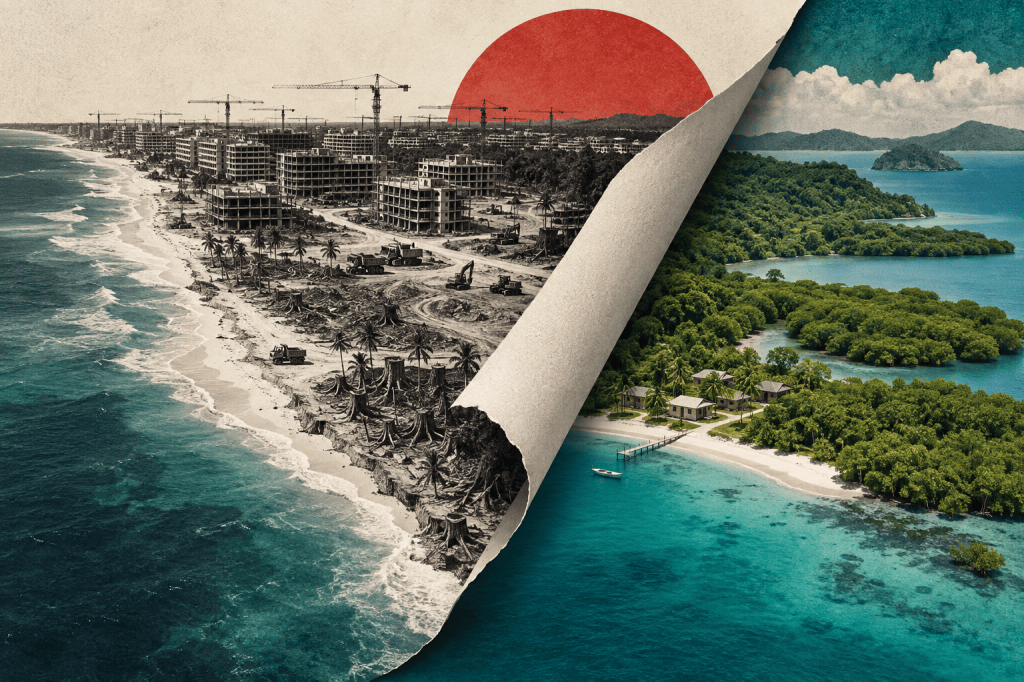
I would call it a loophole, even if nobody set out to create one. A developer who plans infrastructure properly carries the full cost and complexity of doing so. A patchwork of uncoordinated individual builds can produce the same number of houses with none of that planning, and the project as a whole can generate more problems, not fewer: erosion, runoff into the sea, overloaded roads, nobody responsible for shared infrastructure.
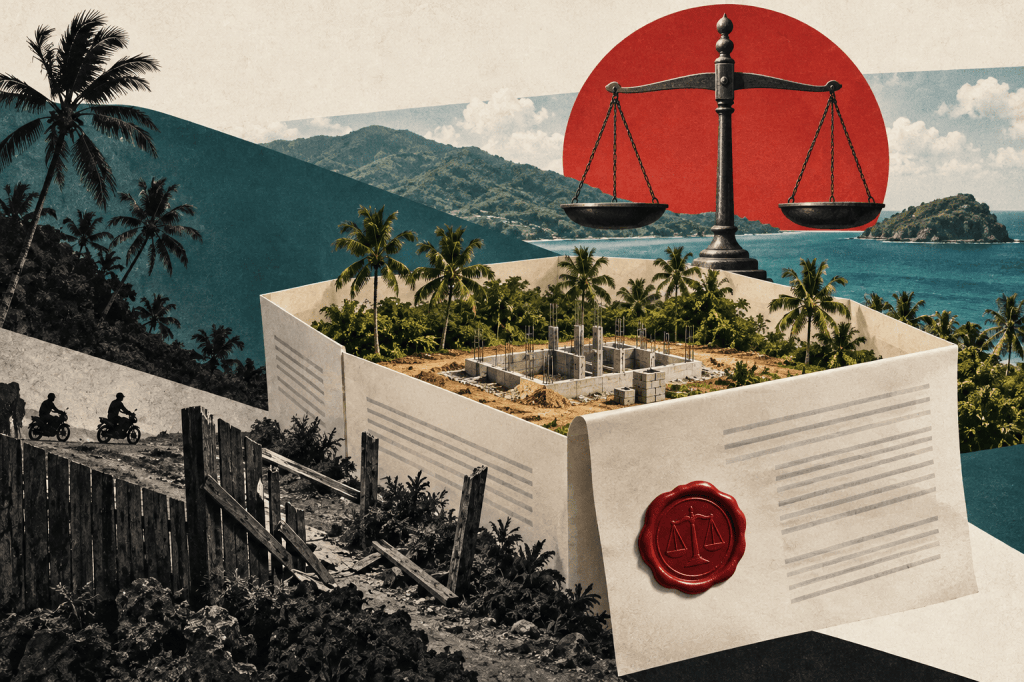
To be fair, the gap is not total. Subdividing land into lots usually comes with its own approvals, and authorities can look at substance rather than form. If one party controls the land, the design and the sales as a single package, the whole thing can still be treated as one project. But a structure that depends on the authorities not noticing is not a foundation anyone should want to build on. The details of each case matter, and anyone considering this route should take proper legal advice in the Dominican Republic.
I’m not arguing for less regulation
As a developer, I am arguing for the same standard for everyone. The goal of environmental and infrastructure rules is to protect the land, the water and the people who will live there. That goal is served equally well, or equally badly, whoever holds the permit.
The fix is simple in principle: regulate by cumulative impact, not by who is building. When many houses are going up in the same area, the combined effect should be assessed and the infrastructure planned together, whether the houses belong to one developer or to a hundred owners.
Samaná is growing fast. We should close this gap before the problems show up in the ground.
Marek Zmysłowski, CEO of Samana Group





Leave a Reply