Here is the Final Score.
Eight years ago, I was living in Lagos, after spending years building online travel and e-commerce companies in Nigeria. I helped launch Jovago (later rebranded as Jumia Travel) and grew it into one of the continent’s leading online hotel booking platforms. After stepping down from that role, I started a new company called HotelOga, providing software and marketing tools for independent hotels that wanted to sell rooms online. The business was growing, but a commercial dispute over our merger with a competitor (and essentially — control of the company) spiralled out of control and culminated in criminal accusations, Nigerian arrest warrants, and an Interpol Red Notice, all based solely on their complaint. Overnight, I went from being known as a technology founder to being treated on paper like a fugitive, and the next years of my life became a fight to clear my name in courts, with Interpol, with Polish authorities, and later against media narratives that repeated the allegations as if they were fact.
People who have never gone through something like this rarely understand how slowly real justice moves. Or how long it takes for facts to catch up with noise. But with time, every institution that mattered examined the situation, reviewed the evidence, and reached the same conclusion.
Today, looking back, the record is finally complete. And clear.
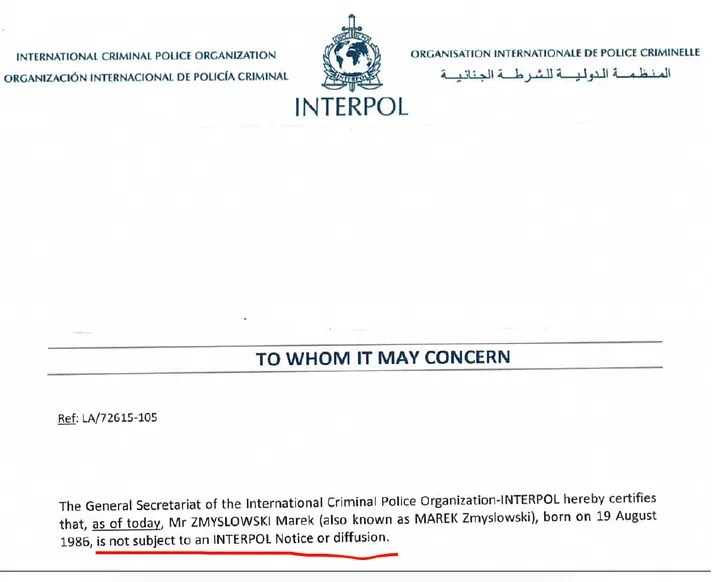
1. Interpol closed the case
After eighteen months on the Interpol Red Notice list, the organisation removed my file and issued a formal position: the Notice should never have been submitted in the first place. It lacked a proper basis and did not meet Interpol standards.
This was the first and most important turning point.
Press enter or click to view image in full size
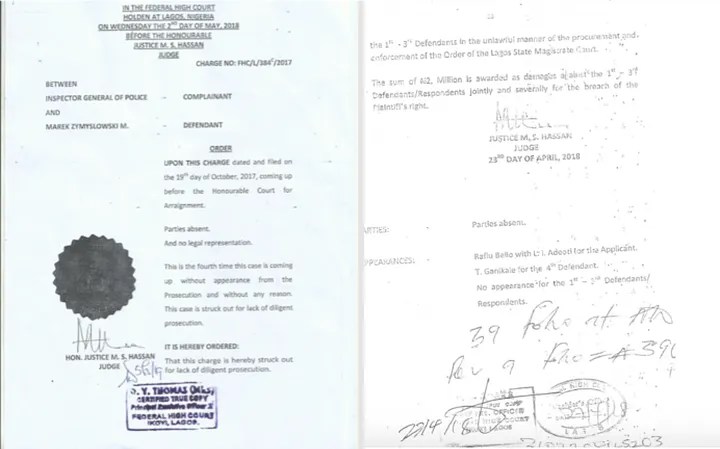
2. Nigerian courts dissmissed allegations and judged Nigerian Police actions against me ILLEGAL.
Two separate arrest warrants issued in Nigeria were struck down by Nigeria’s own Federal Court due to lack of evidence and lack of any meaningful prosecution.
This is worth emphasising. The same system that was used to initiate the claims is the system that ultimately invalidated them. Quietly, methodically, and in accordance with the law.
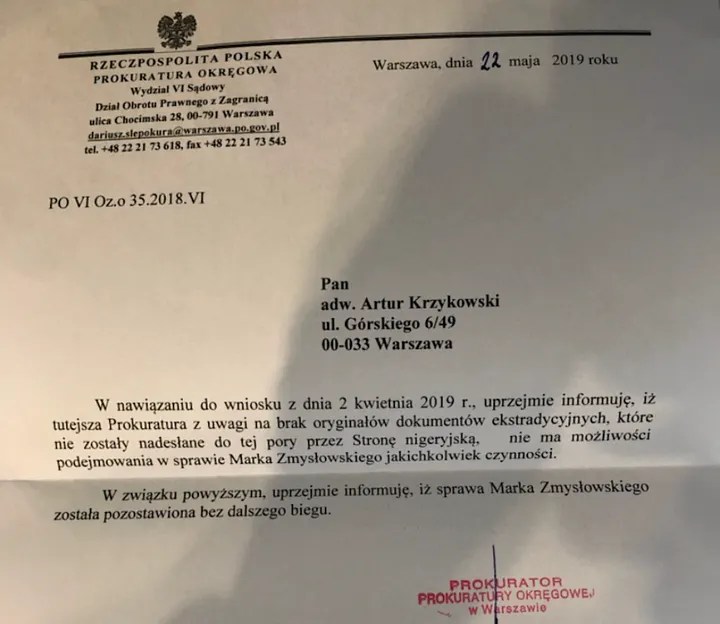
3. Polish authorities rejected the case for extradition due to lack of merit and evidence.
The Polish Attorney General independently reviewed the request and closed it, citing lack of evidence.
It was yet another confirmation that the claims could not withstand legal scrutiny outside the environment in which they originated.
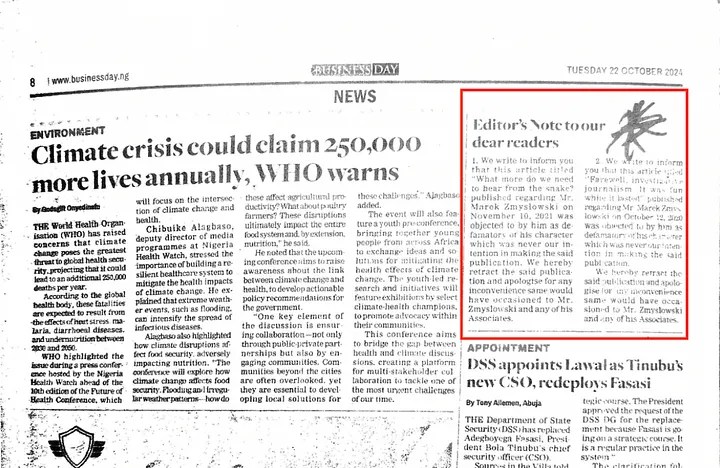
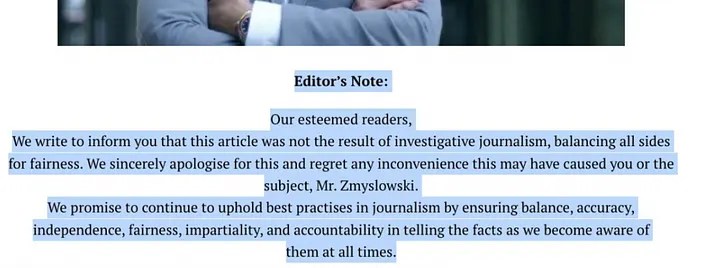
4. All media outlets retracted and apologised
As the legal matters faded, another challenge emerged — online narratives amplified by a journalist who published damaging and inaccurate stories about me.
Both newspapers that carried those stories later retracted them and issued written apologies.
One clarified that the article “was not the result of investigative journalism.”
Another stated publicly that the publication was never intended to reflect my character and apologised for the inconvenience caused.
These were important steps, not only legally but personally. Public accusations often travel farther than public corrections, yet corrections matter. They rebuild trust piece by piece.
5. A significant development in the UK High Court
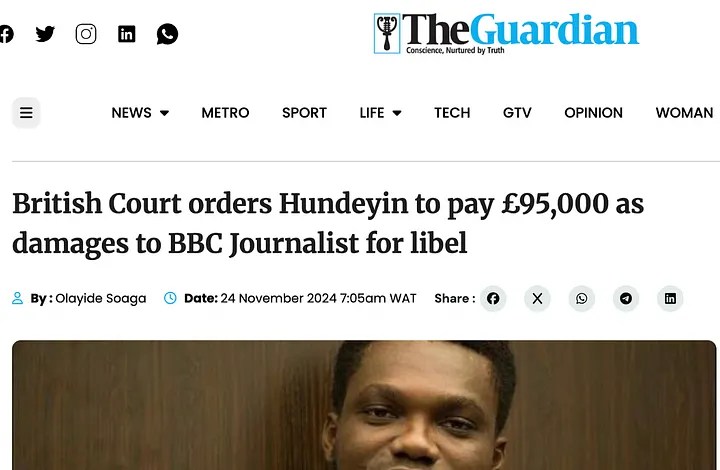
In 2024, the High Court in London issued a detailed judgment in an unrelated case involving the same journalist who was most likely paid to write libels against me. This wasn’t his first time.
The court found that he had made serious and entirely false allegations about another individual, and ordered him to pay ninety thousand pounds in damages, along with a permanent injunction.
While the case did not concern me, it did confirm a broader pattern and provided important context.
My own proceedings against him continue — slowly, but steadily. Justice works on its own timetable, and I have learned to respect that.
6. The recorded conversation: “pressure tactics”
The recording below captures a conversation with the man involved in the Nigerian complaint against me. In it, he describes the case as a means of applying pressure in our business dispute. He discusses paying the people handling it to initiate the case and paying them again to close it, and repeatedly says that I am not a criminal. This is why I describe what happened as the use of the police to pursue a commercial dispute, rather than a genuine criminal investigation.
Key moments in the recording (based on YouTube’s automatically generated English captions; summaries below are paraphrases):
0:00–0:20: I ask whether the same people used to bring the case can also undo it. The other speaker agrees and says they can drop it.
0:24–0:48: I ask how the authorities could first be told I was a criminal and then be asked to drop the case. He says this would not be a problem and refers to “pressure tactics”.
0:50–1:07: He describes money being paid to initiate the case and further money being used to close it, while saying I am not the criminal they are pursuing.
1:23–1:35: I describe a serious falling-out that we now want to resolve. He again says that I am not a criminal.
Transcript of the recording
Source: YouTube’s automatically generated English captions. This is an unverified caption transcript, not a certified verbatim record. Caption wording, repetitions and apparent recognition errors are preserved below; punctuation and paragraph breaks have been added for readability. Unclear passages should be checked against the recording. Speaker identities are not assigned by the captions.
[0:00] So basically the same people that you used to push it against me now you can use them to undo it and they will do it.
[0:07] Yeah. [screaming] Yeah. Basically basically these guys are people right? They once you tell them that look and it should be they’ll drop it right. They are not ined. They’re not giving their money. Right.
[0:21] Okay. [laughter] Right. And they they they’re not going to have a problem that you first you they’re not going to have a problem that you told them, “Oh, this guy is a criminal and now you go to them and you say, I was kidding. He’s not a criminal. Drop the case.” They won’t have a problem with that. They will leave me alone.
[0:37] No, no, they don’t HAVE A PROBLEM. THEY DON’T HAVE A problem because we tell them that look, they all also know this tactic, right? They not they know we are. We did all this because of pressure tactics, right?
[0:50] So they also they GOT YOUR MONEY. THEY want money basically. So whichever way we pay them money to initiate the case, we get them money to close the case. They’re not interested in any any uh any other matter, you know, and you’re not you’re not the criminal who there after right,
[1:09] you know, you’re you’re just I mean we have to push this case. You can even get the best drivers. We have to push it, you know, because you’re not international criminal or terrorist who [laughter] stay
[1:23] and most importantly, you know, I’m not. We just have a we had a huge fallout, but now we want to finish it, right?
[1:29] You’re a criminal. You’re not You’re not a criminal. You’re not a criminal. I mean, come on. I didn’t, you know,
The recording provides context for my account; the court decisions discussed above are the separate legal record concerning the warrants and police actions. Facts are boring, but they tend to win.
As we head into Christmas
May your partners be honest
May your negotiations be legal
And may you never need a video like this
Eight years. Many chapters. One outcome.
When I look back, I see three things.
First, that institutions — even imperfect ones — eventually correct themselves.
Second, that reputation is not lost when someone attacks it; it is lost only when you stop defending it.
And third, that persistence matters more than noise, speed, or public perception.
I have been cleared in every jurisdiction.
I have been cleared by police authorities, Interpol, the courts, and the media, which revisited its reporting.
A final note
I do not share this to reopen old stories. I share it to close them properly.
Time has a way of blurring facts, and people who dislike you will always try to rewrite the narrative. But truth has a longer lifespan than outrage. And patience, though often uncomfortable, is a powerful strategy.
Eight years ago, this was a crisis.
Today, it is a resolved chapter — and a reminder of why you never stop telling your story, calmly and consistently, until the record reflects reality.


Leave a Reply